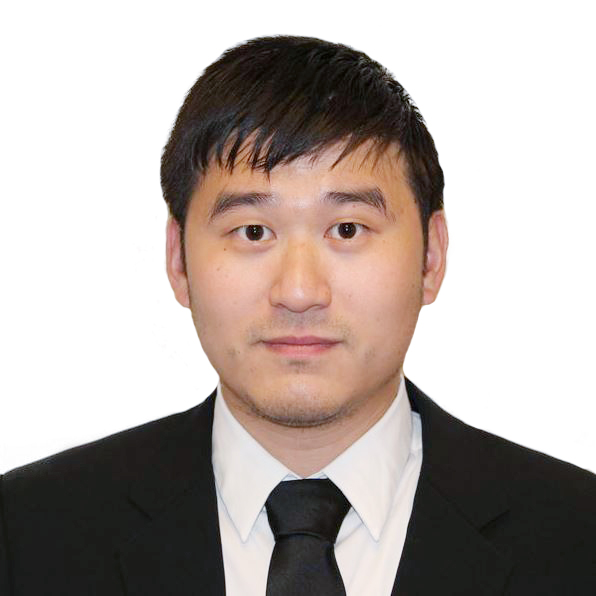
Ping Zhang
 |
Ping Zhang, PhD, FAMIA, FIAHSI Email: zhang.10631@osu.edu |
Short Biography
Ping Zhang is a Full Professor at The Ohio State University (OSU), with joint appointments in the Department of Computer Science and Engineering (CSE) and the Department of Biomedical Informatics (BMI). He serves as the Division Chief of Artificial Intelligence in Digital Health (AIDH) at OSU and the Director of the AIDH Core at the OSU Wexner Medical Center (OSUWMC).
He leads the Artificial Intelligence in Medicine (AIMed) Lab, which develops machine learning methods to answer a core clinical question: which treatments work, for whom, and when? The lab advances multimodal LLMs, AI agents, and causal inference, working across cellular perturbation data and population-scale patient records, and deploys the resulting systems in live hospital settings.
Openings
AIMed Lab currently has openings for PhD students (Spring/Fall 2027), postdoctoral associates (AI/ML), postdoctoral associates (HCI), and visiting scholars with research interests related to multimodal LLMs, AI agents, causal inference, and medical image analysis. Please reach out to Dr. Ping Zhang via email if you are interested.
Research Themes
We work on LLMs and AI agents, multimodal representation learning, causal inference, and human-AI interaction. Recent work appears at CVPR, ICCV, NeurIPS, ICLR, KDD, AAAI, and CHI, as well as in TPAMI, Nature Machine Intelligence, and Nature Medicine.
Foundation Models & LLM Agents
We build and evaluate medical LLMs, vision-language models, and agent systems, using benchmarks grounded in real clinical data instead of static leaderboards.
Ruoqi Liu et al. Teaching multimodal LLMs to comprehend 12-lead electrocardiographic images. npj Digital Medicine, 2026.
Jiahao Xu et al. SurgWound-Bench: A benchmark for surgical wound diagnosis. npj Digital Medicine, 2026.
Yuanlong Wang et al. PBSBench: A multi-level vision-language framework and benchmark for hematopathology whole slide image interpretation. Findings of CVPR, 2026.
Zishan Gu et al. A proactive agent collaborative framework for zero-shot multimodal medical reasoning. Advanced Intelligent Systems, 2025.
Fenglin Liu et al. Aligning, autoencoding and prompting large language models for novel disease reporting. TPAMI, 2025.
Phenotypic Drug Discovery from Multimodal Data
We learn representations of how cells respond to compounds, from transcriptomic profiles to high-content microscopy imaging, to identify and repurpose drug candidates.
Jiayuan Chen et al. From retrieval to reasoning: Agentic mechanism prediction from cell painting profiles. NeurIPS, 2026.
Jiayuan Chen et al. Intervention-aware multiscale representation learning from imaging phenomics and perturbation transcriptomics. CVPR, 2026.
Zhankun Xiong et al. Multi-to-uni modal knowledge transfer pre-training for molecular representation learning. Nature Communications, 2026.
Jiayuan Chen et al. Integrating biological knowledge for robust microscopy image profiling on de novo cell lines. ICCV, 2025 (Highlight, 2.3%).
Thai-Hoang Pham et al. A deep learning framework for high-throughput mechanism-driven phenotype compound screening and its application to COVID-19 drug repurposing. Nature Machine Intelligence, 2021.
Causal Inference & Real-World Evidence
We estimate treatment effects from observational patient data (such as EHRs and claims), emulating clinical trials to determine which treatments work, for whom, and when.
Seungyeon Lee et al. A deep subgrouping framework for precision drug repurposing via emulating clinical trials on real-world patient data. KDD, 2025.
Ruoqi Liu et al. KG-TREAT: Pre-training for treatment effect estimation by synergizing patient data with knowledge graphs. AAAI, 2024.
Ruoqi Liu et al. CURE: A deep learning framework pre-trained on large-scale patient data for treatment effect estimation. Patterns, 2024.
Ruoqi Liu et al. Estimating treatment effects for time-to-treatment antibiotic stewardship in sepsis. Nature Machine Intelligence, 2023.
Ruoqi Liu et al. A deep learning framework for drug repurposing via emulating clinical trials on real-world patient data. Nature Machine Intelligence, 2021.
Clinical Deployment & Human-AI Collaboration
We build decision support systems that quantify their own uncertainty, generalize across patient populations, and are tested in real hospital settings.
Thai-Hoang Pham et al. The boundaries of fair AI in medical image prognosis: A causal perspective. NeurIPS, 2025.
Yilan Wu et al. An eyecare foundation model for clinical assistance: a randomized controlled trial. Nature Medicine, 2025.
Shao Zhang et al. Rethinking human-AI collaboration in complex medical decision making: A case study in sepsis diagnosis. CHI, 2024.
Changchang Yin et al. SepsisLab: Early sepsis prediction with uncertainty quantification and active sensing. KDD, 2024.
Thai-Hoang Pham et al. Fairness and accuracy under domain generalization. ICLR, 2023.
(For a complete chronological list of our work, please see the Full Publications page)
Research Support
Our lab gratefully acknowledges ongoing and past support from NSF (e.g., CAREER IIS-2145625, SenSE CBET-2037398), NIH (e.g., R01 NIAID-R01AI188576, R01 NIGMS-R01GM141279, R01 NCI-R01CA301579, R01 NICHD-R01HD120364, R25 NLM-R25LM014223, R01 NIA-R01AG097722, R01 NIDA-R01DA057668, R01 NCI-R01CA273924, R01 NIGMS-R01GM122845, R21 NIBIB-R21EB030294), Ohio Department of Medicaid, Google, Lyntek Medical Technologies, Lindonlight Collective, Medforall, PharmaEssentia, and Nationwide Children's Hospital.
Professional Activities
Action Editor, Transactions on Machine Learning Research (TMLR), 2026-present
Founder and Organizer, AI for Health Grand Round, The Ohio State University, 2026-present
IAHSI Fellow, 2025-present
AMIA Fellow, 2020-present
IEEE Senior Member, 2018-present
ACM Distinguished Speaker, 2018-2021
Associate Editor, BMC Digital Health, 2022-present
Associate Editor, BMC Medical Informatics and Decision Making, 2018-present
Associate Editor, Journal of Healthcare Informatics Research, 2016-present
Editorial Board, CPT: Pharmacometrics & Systems Pharmacology, 2015-2023
Media and Publicity Chair, KDD 2018
Media and Publicity Chair, KDD 2019
Local Chair, SDM 2020
Workshop Chair, SDM 2023
Awards
ICML Gold Reviewer Award, 2026
OSU President’s Research Excellence Accelerator Award, 2024
World's Top 2% Scientists, 2023-present
NSF CAREER Award, 2022
OSU Award for Excellence in Mentoring, 2021
ICML Top Reviewer, 2020
DII National Data Science Challenge Honorable Mention Award, 2019
IBM Master Inventor Award, 2018
IBM Outstanding Technical Achievement Award for Cognitive-driven Chronic Disease Management Solution Suite, 2018
IBM Outstanding Technical Achievement Award for Patient Similarity Analytics, 2016
ESWC Best In-Use/Industrial Paper Award, 2016
AMIA Summits Nomination for Marco Ramoni Distinguished Paper Award, 2014
ACM Future of Computing Gold Award (First Place) for Graduate Projects, 2012
NSF Travel Grant Award for BIBM, 2012